
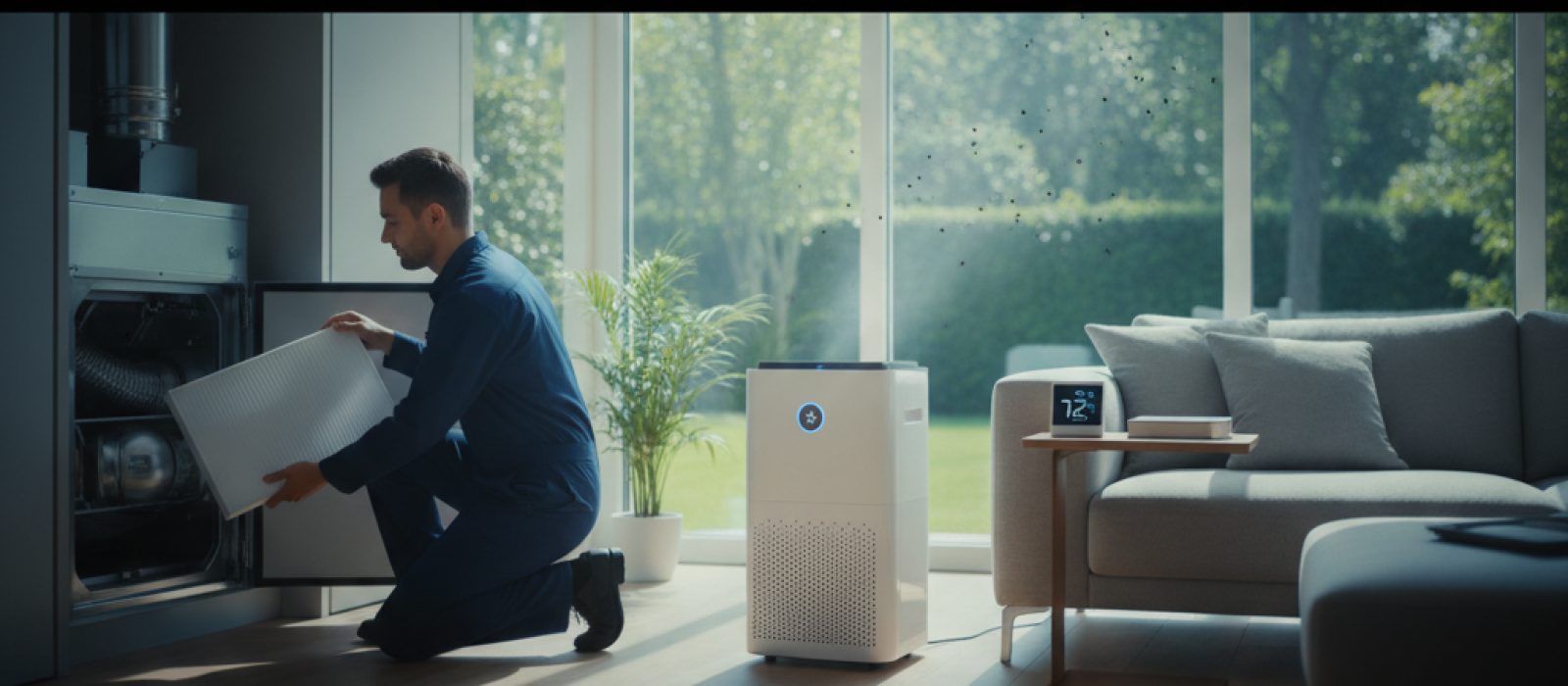
HEPA Air Cleaners for Allergies: What Actually Works
Learn how HEPA air cleaners function, their limitations in home environments, and how to effectively manage indoor air quality for allergy relief.
4 min read

Ozone generators and ionizers are frequently marketed as advanced solutions for indoor air purification, yet they operate on principles that differ significantly from standard filtration. Ozone generators are designed to produce ozone gas (O3) intentionally. The goal is to have this gas react with pollutants in the air or on surfaces, effectively oxidizing them to neutralize odors or biological contaminants. Because ozone is a highly reactive molecule, it can chemically alter the composition of substances it encounters.
Ionizers, often called needlepoint or bipolar ionizers, function by emitting charged particles into the air. These ions attach to airborne particles such as dust, dander, or smoke, causing them to clump together. Once these particles become heavier due to the ion attachment, they are intended to fall out of the breathing zone and onto surfaces, or be more easily captured by an HVAC system's filtration media. While both technologies aim to improve Indoor Air Quality, their methods pose distinct challenges regarding occupant health and chemical safety.
Ozone is a powerful lung irritant. Even at concentrations that do not exceed standard health guidelines, it can cause immediate respiratory issues. Common symptoms associated with ozone exposure include throat irritation, coughing, chest pain, and shortness of breath. For individuals with existing conditions like asthma or chronic obstructive pulmonary disease, even low levels of ozone can exacerbate symptoms and lead to increased sensitivity to other airborne triggers.
The primary concern with ozone generators is that they must operate at concentrations high enough to be effective at neutralizing odors, which often places those levels well above what is considered safe for human or pet exposure. Because the gas is meant to react with organic matter, it does not distinguish between a pollutant and the lining of human lungs. Consequently, these devices are generally recommended for use only in unoccupied spaces to allow the gas to dissipate before residents return.
While ionizers do not typically create as much ozone as dedicated ozone generators, many models can still produce trace amounts as a byproduct of the ionization process. This is often referred to as secondary ozone. Beyond the potential for ozone creation, there is the question of particle deposition. By forcing particles to stick to walls, floors, and furniture, ionizers may simply relocate contaminants rather than removing them from the home environment.
If you are looking to manage dust and allergens, professional Air Duct Cleaning is often a more effective long-term strategy. Removing the accumulation of debris from within the ductwork addresses the source of the issue rather than attempting to manipulate the charge of particles after they have already entered the living space. Regular maintenance of your system ensures that air is being filtered through high-efficiency media rather than being treated with reactive gases.
When the priority is improving the air you breathe, mechanical filtration remains the gold standard. High-Efficiency Particulate Air (HEPA) filters are designed to capture a significant percentage of microscopic particles without introducing chemicals or reactive gases into the home. These filters work by physically trapping pollutants as air passes through the media, providing a passive and safe method of purification.
For those concerned with chemical odors or volatile organic compounds (VOCs), activated carbon filters are the preferred choice. These filters adsorb gases and odors through a porous surface area, neutralizing them without the need for chemical reactions. Integrating these solutions into your existing heating and cooling infrastructure is a practical way to enhance your environment. If you find your current system is struggling to maintain airflow with higher-rated filters, consult with a professional regarding potential HVAC Maintenance & Tune-up to ensure your blower motor and ductwork are optimized for the increased static pressure.
Determining the right approach for your home requires assessing your specific ventilation needs and the types of pollutants present. If you suspect your home has significant moisture or mold issues, an ionizer or ozone generator will not solve the underlying problem. These devices are reactive, not preventative. Addressing moisture intrusion or leaks is a structural concern that may require professional intervention.
Furthermore, if you are considering installing whole-home air purification components, it is essential to ensure they are compatible with your existing equipment. Improperly installed components can restrict airflow, leading to premature system failure or reduced energy efficiency. A professional assessment can help you decide between standalone portable units and integrated solutions that work in tandem with your furnace or air conditioning system. Proper installation is critical to ensure that your air quality improvements do not come at the cost of system performance.
Learn how HEPA air cleaners function, their limitations in home environments, and how to effectively manage indoor air quality for allergy relief.
Learn to identify common indoor pollutants and discover practical, effective strategies to improve the air quality within your home.
Learn the balance between natural ventilation and mechanical filtration to maintain optimal indoor air quality in your home.
Learn how common household features like aquariums and plants impact indoor air quality and how to manage the resulting humidity levels effectively.
Discover how holiday traditions impact your home's indoor air quality and learn practical steps to maintain a healthy breathing environment this winter.
Improve productivity and health by optimizing the indoor air quality of your home office through ventilation, filtration, and humidity control.
Be the first to comment.