
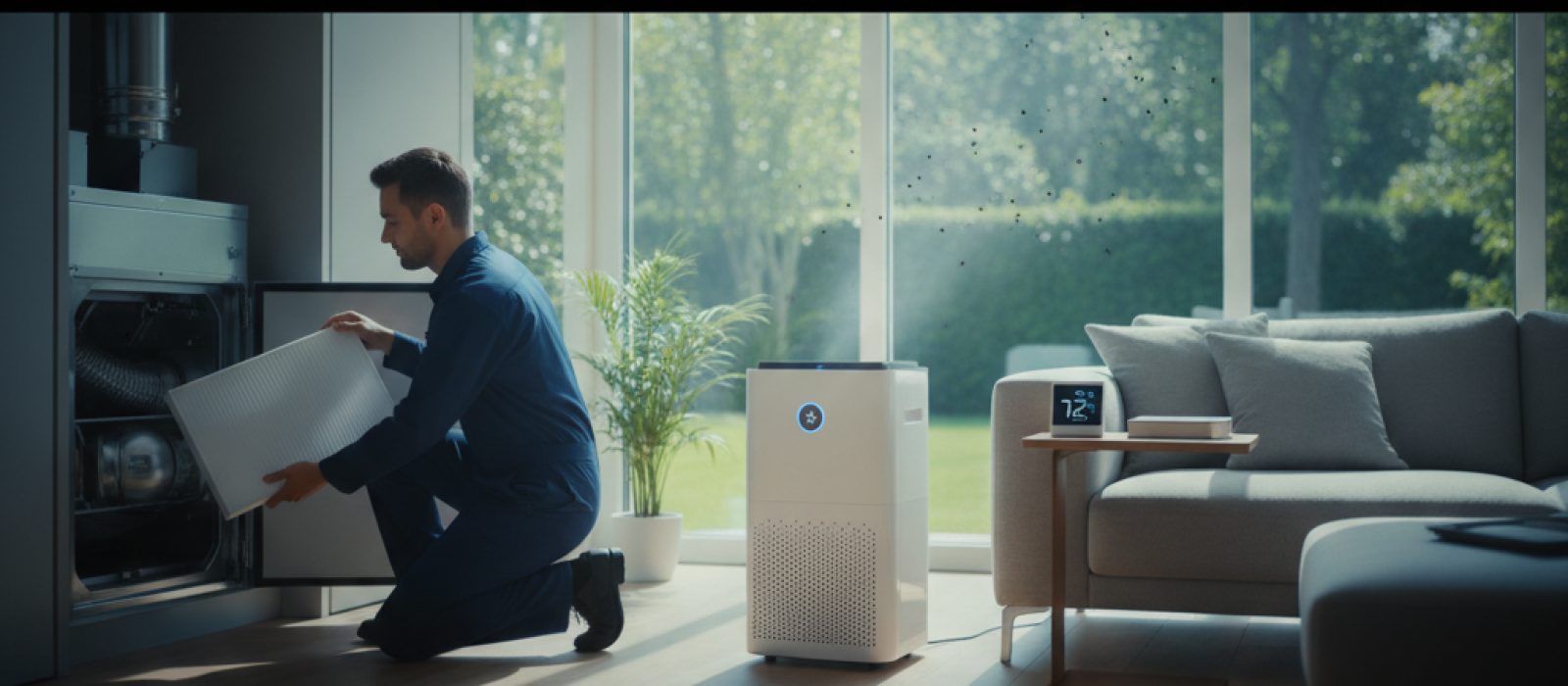
HEPA Air Cleaners for Allergies: What Actually Works
Learn how HEPA air cleaners function, their limitations in home environments, and how to effectively manage indoor air quality for allergy relief.
4 min read

Managing indoor humidity along the Gulf Coast requires a departure from standard cooling strategies. Because the region experiences high dew points for the majority of the year, a standard air conditioning system often reaches its set temperature before it has run long enough to effectively extract moisture from the air. This results in a home that feels cool but clammy, creating an environment where mold, mildew, and dust mites thrive.
Achieving true comfort involves understanding that temperature and humidity are distinct variables. While your thermostat regulates the former, the latter often requires dedicated equipment or specialized system configurations. This article explores how to move beyond simple temperature settings to achieve balanced indoor air quality.
When an air conditioner is oversized for a home, it cools the space too quickly. This rapid cooling triggers the thermostat to shut the system off prematurely. In a humid climate, this is problematic because the evaporator coil requires sustained operation to pull moisture out of the air and drain it through the condensate line.
If the system short cycles, the moisture on the coil never has the chance to drip into the pan. Instead, it remains on the coil and is re-evaporated into the home as soon as the fan continues to run. Correcting this often begins with a professional assessment of your current AC Services to ensure the equipment is properly sized for your specific square footage and insulation levels.
For many homes in high-humidity zones, a standalone dehumidifier is the most effective way to maintain consistent moisture levels. Unlike an air conditioner, which is tied to the temperature of the room, a whole-home dehumidifier operates independently. It can remove moisture even when the cooling system is not running.
These units are typically integrated directly into the existing Ductwork Services, allowing them to treat air before it is circulated throughout the living space. By maintaining a relative humidity level between 40% and 50%, these systems prevent the dampness that leads to warped wood floors and musty odors, significantly improving the overall Indoor Air Quality.
High humidity levels are often exacerbated by compromised ductwork. If supply or return ducts have leaks, the system may pull in unconditioned, humid air from unconditioned spaces like attics or crawlspaces. This introduces moisture directly into the air stream, forcing the system to work harder to maintain comfort.
Periodic inspections are necessary to ensure that seals remain tight and insulated. If your home feels excessively humid despite a functional cooling system, consider scheduling a professional evaluation to determine if your ducts are drawing in outside air. Proper sealing is a key component of Energy Efficient Solutions, as it reduces the load on your cooling equipment and keeps humidity out of the home.
Homes built to modern efficiency standards are often sealed so tightly that they lack proper air exchange. While this saves on energy costs, it can trap moisture inside. If you do not have a mechanical ventilation system, the humidity generated by showers, cooking, and daily living remains trapped indoors.
An Energy Recovery Ventilator (ERV) is a practical solution for Gulf Coast homes. It exchanges stale indoor air with fresh outdoor air while transferring the moisture from the incoming air to the outgoing air stream. This process brings in fresh oxygen without overwhelming your air conditioning system with raw, humid outdoor air, striking a balance between air quality and energy consumption.
While installing advanced equipment requires a licensed professional, homeowners can take specific steps to support the system's ability to dehumidify. Keeping the evaporator coil clean is critical, as a dirty coil cannot effectively transfer heat or condense moisture.
If you notice persistent water pooling or musty smells near your unit, contact a professional for a Maintenance & Tune-up. Attempting to clear blocked condensate lines with harsh chemicals or improper tools can lead to refrigerant leaks or electrical damage, both of which require specialized training to handle safely.
Learn how HEPA air cleaners function, their limitations in home environments, and how to effectively manage indoor air quality for allergy relief.
Learn to identify common indoor pollutants and discover practical, effective strategies to improve the air quality within your home.
Learn the balance between natural ventilation and mechanical filtration to maintain optimal indoor air quality in your home.
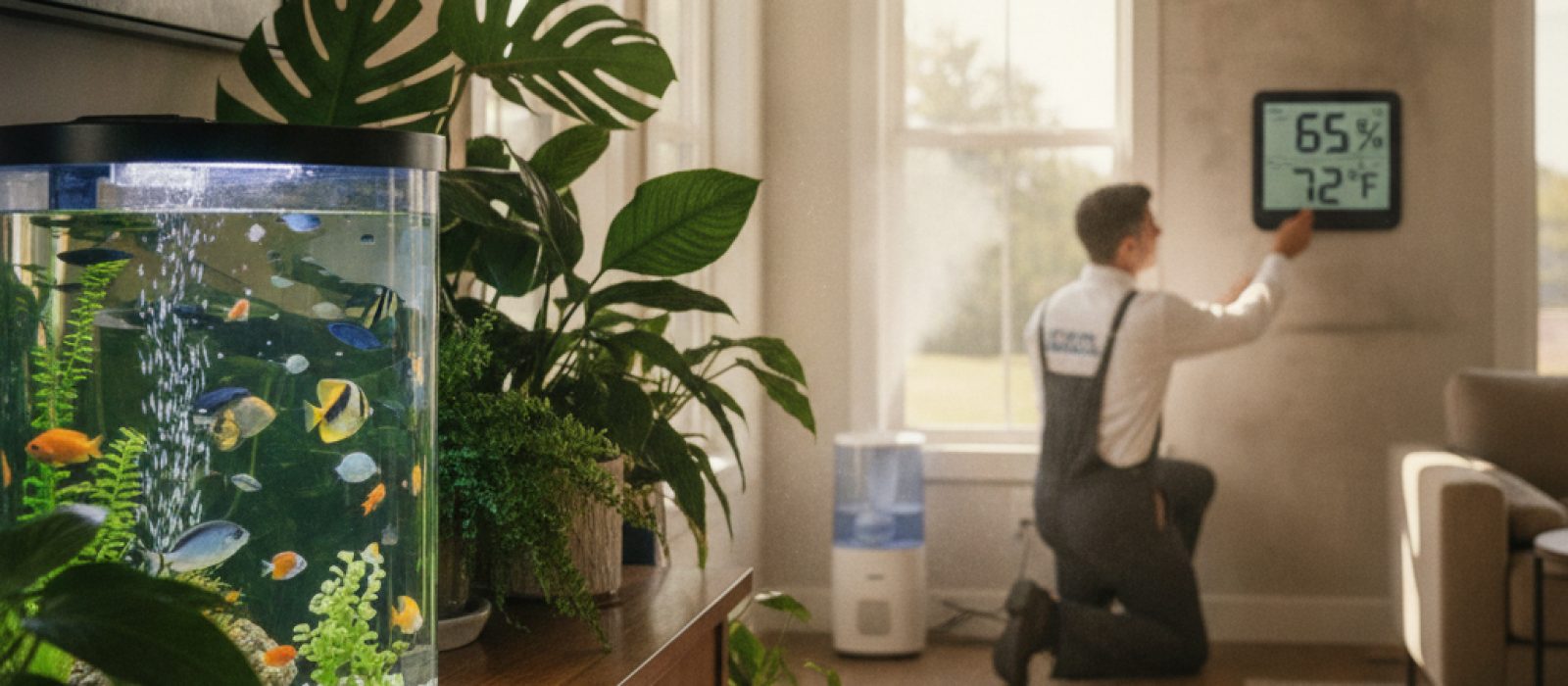
Learn how common household features like aquariums and plants impact indoor air quality and how to manage the resulting humidity levels effectively.
Discover how holiday traditions impact your home's indoor air quality and learn practical steps to maintain a healthy breathing environment this winter.
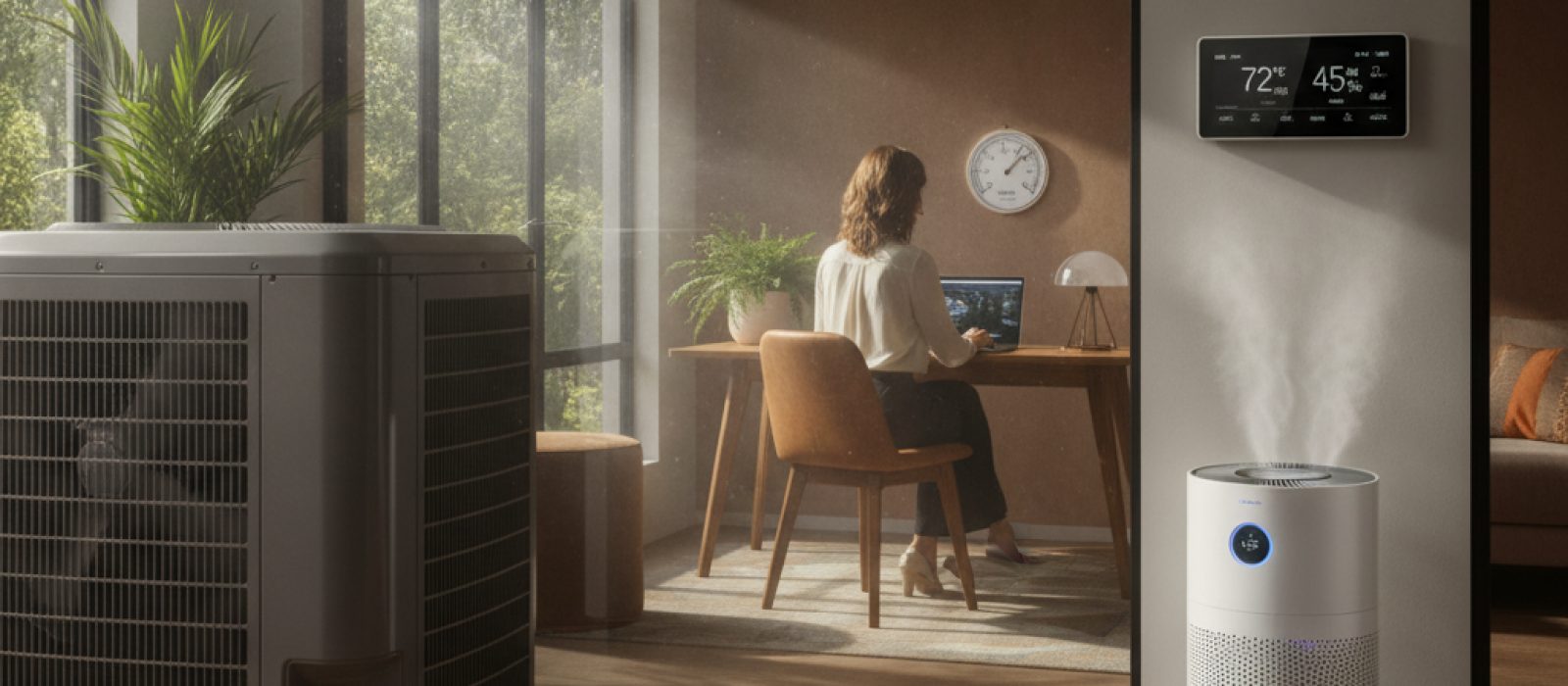
Improve productivity and health by optimizing the indoor air quality of your home office through ventilation, filtration, and humidity control.
Be the first to comment.