
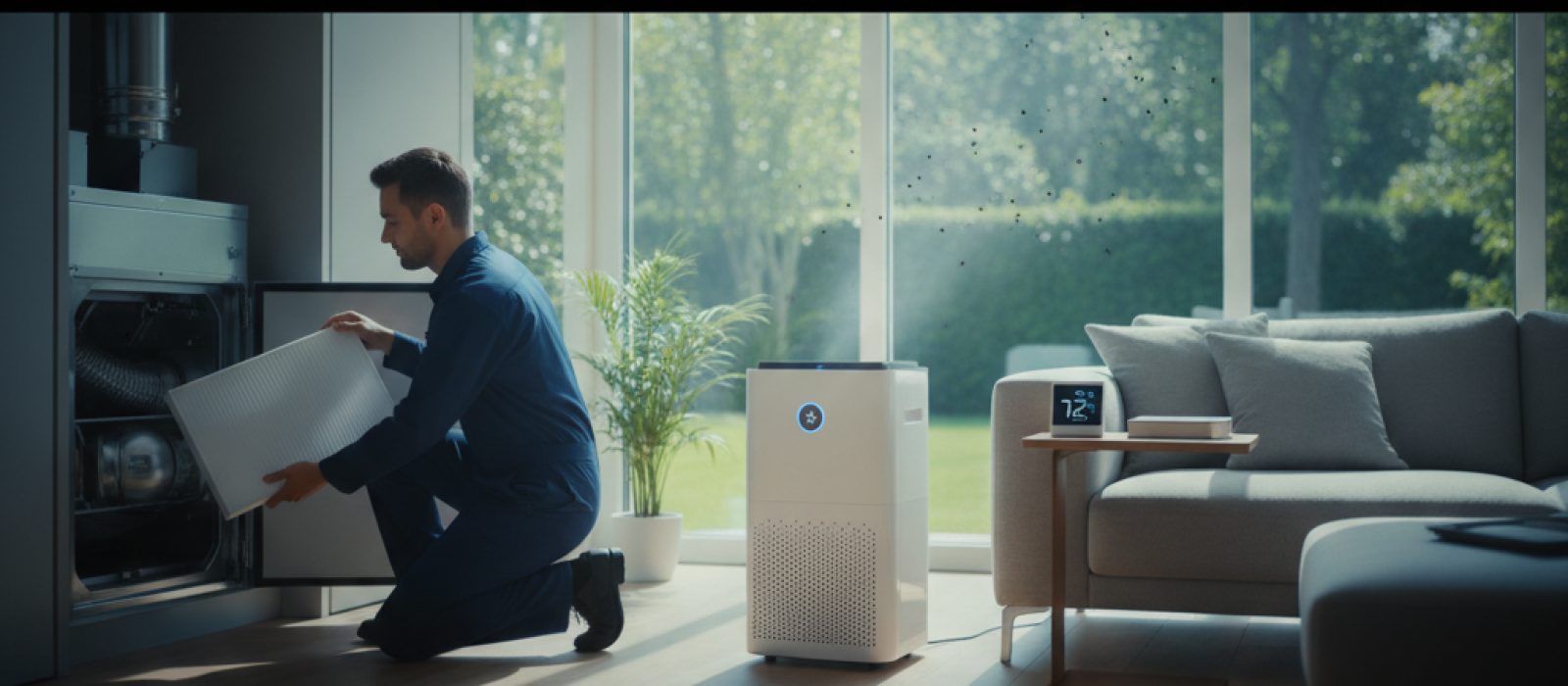
HEPA Air Cleaners for Allergies: What Actually Works
Learn how HEPA air cleaners function, their limitations in home environments, and how to effectively manage indoor air quality for allergy relief.
4 min read

Modern home construction focuses heavily on air sealing to improve efficiency. While a tightly sealed building envelope prevents conditioned air from escaping, it also traps moisture, volatile organic compounds, and stale air inside. Mechanical ventilation systems, specifically Energy Recovery Ventilators (ERV) and Heat Recovery Ventilators (HRV), are designed to introduce fresh outdoor air while minimizing the impact on indoor climate control.
These systems function by drawing in fresh air from outside while simultaneously exhausting stale indoor air. They pass these two airstreams through a heat exchanger core, where energy is transferred between the airflows. This process pre-conditions the incoming air using the temperature of the outgoing air, reducing the load on your primary heating and cooling equipment.
A Heat Recovery Ventilator (HRV) is primarily designed to exchange heat. In the winter, the core captures heat from the warm, stale air leaving the home and transfers it to the cool, fresh air entering the home. This allows a constant supply of fresh air without the significant energy penalty of bringing in freezing outdoor temperatures.
HRV systems are most effective in climates with long, cold winters where the primary goal is heat retention. Because they only exchange thermal energy, they do not significantly manage moisture levels. In extremely cold regions, the condensation generated during the heat exchange process must be properly drained to prevent freezing within the unit.
An Energy Recovery Ventilator (ERV) operates on the same basic principle as an HRV but includes an enthalpy core that transfers both heat and moisture. By moving humidity between the incoming and outgoing airstreams, an ERV helps maintain consistent relative humidity levels throughout the year.
In hot, humid climates, an ERV prevents excessive moisture from entering the home by transferring humidity from the incoming outdoor air to the drier exhaust air. In dry winters, it can help retain indoor moisture by transferring it from the exhaust air back to the incoming fresh air. This dual-action approach is essential for maintaining optimal Indoor Air Quality in diverse climates.
Selecting between an ERV and an HRV depends largely on your regional climate and the specific humidity challenges of your home. If you live in an area with high summer humidity, an ERV is generally the superior choice because it limits the amount of latent heat—moisture—entering the living space.
Conversely, in regions with very cold, dry winters and mild summers, an HRV may be the more efficient and durable option. Because these systems are integrated into your home's infrastructure, consulting with a professional for a professional assessment of your current ventilation needs is recommended. Proper integration often involves complex Ductwork Services to ensure balanced airflow throughout every room.
Both systems require regular maintenance to remain effective. Filters must be cleaned or replaced according to the manufacturer's schedule to prevent airflow restriction, which forces the system's fans to work harder and consume more electricity. A system that is not properly maintained may fail to provide adequate air exchange, leading to a buildup of pollutants.
Beyond filter changes, the heat exchange core requires periodic inspection and cleaning. If you notice a decline in system performance or unusual noises, it is time to schedule a professional inspection. Regular Maintenance & Tune-up visits can identify potential blockages in the intake or exhaust vents, ensuring the system continues to operate at peak efficiency.
Ventilation systems can be installed as standalone units or integrated directly into your existing forced-air system. Integration allows the ERV or HRV to distribute fresh air through the same supply ducts used by your furnace or heat pump. This setup provides consistent air circulation, though it requires careful balancing to ensure the ventilation system does not negatively impact the static pressure of your existing equipment.
For homeowners interested in long-term performance, ensuring the system is properly sized is critical. An undersized unit will not provide enough air changes to effectively remove indoor pollutants, while an oversized unit may be unnecessarily noisy and inefficient. If your home is undergoing renovations or significant energy-efficiency upgrades, it is an ideal time to discuss these systems with a specialist in Energy Efficient Solutions to ensure your home remains comfortable and healthy.
Installing a ventilation system involves electrical connections, ductwork modifications, and air balancing. While some homeowners may be comfortable with basic filter replacements, the installation of the core unit and the integration with existing supply lines should be performed by a licensed professional. Improper installation can lead to backdrafting of combustion appliances, moisture damage, or uneven pressure zones within the home.
If you are concerned about your home's air quality, a professional can test for specific pollutants and verify that your ventilation system is operating at the correct air exchange rate. This ensures that the system is actually delivering the benefits intended for your specific living environment.
Learn how HEPA air cleaners function, their limitations in home environments, and how to effectively manage indoor air quality for allergy relief.
Learn to identify common indoor pollutants and discover practical, effective strategies to improve the air quality within your home.
Learn the balance between natural ventilation and mechanical filtration to maintain optimal indoor air quality in your home.
Learn how common household features like aquariums and plants impact indoor air quality and how to manage the resulting humidity levels effectively.

Discover how holiday traditions impact your home's indoor air quality and learn practical steps to maintain a healthy breathing environment this winter.
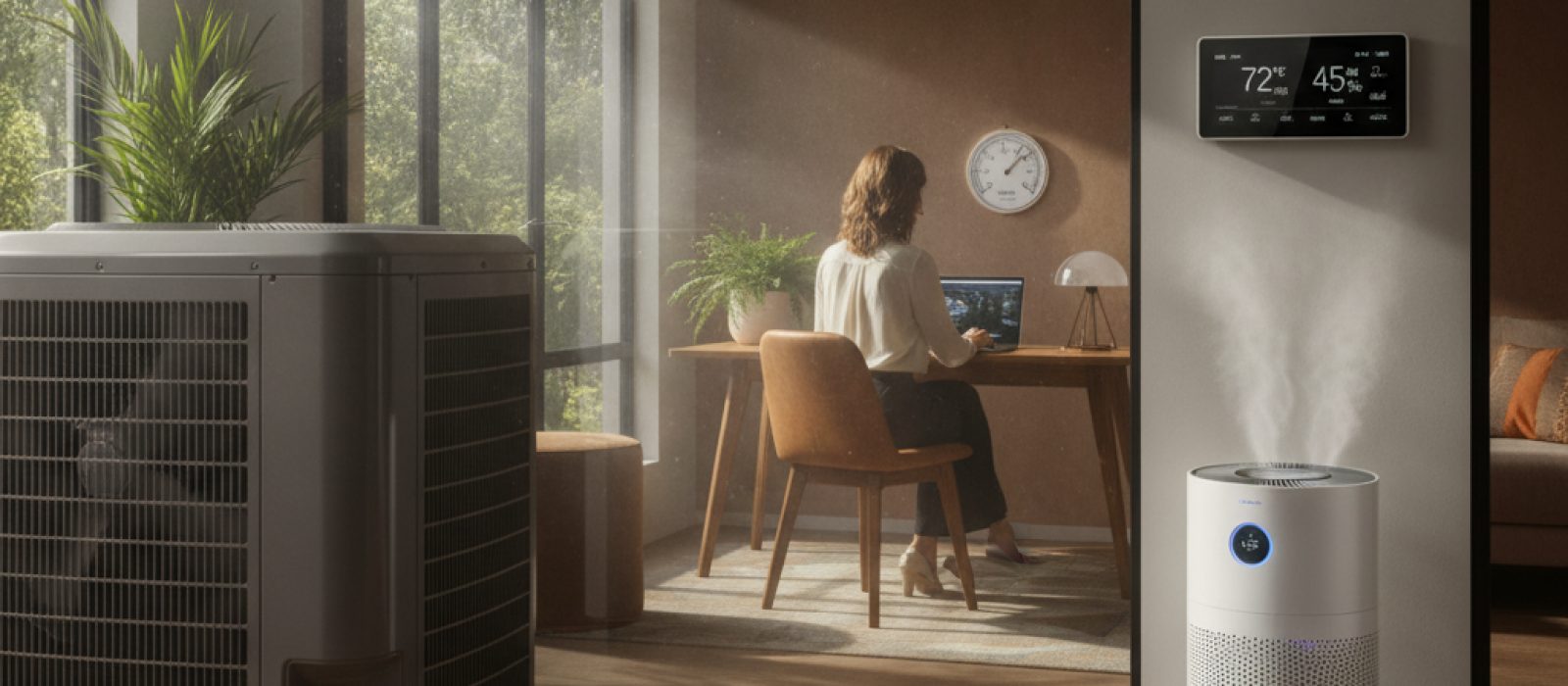
Improve productivity and health by optimizing the indoor air quality of your home office through ventilation, filtration, and humidity control.
Be the first to comment.