
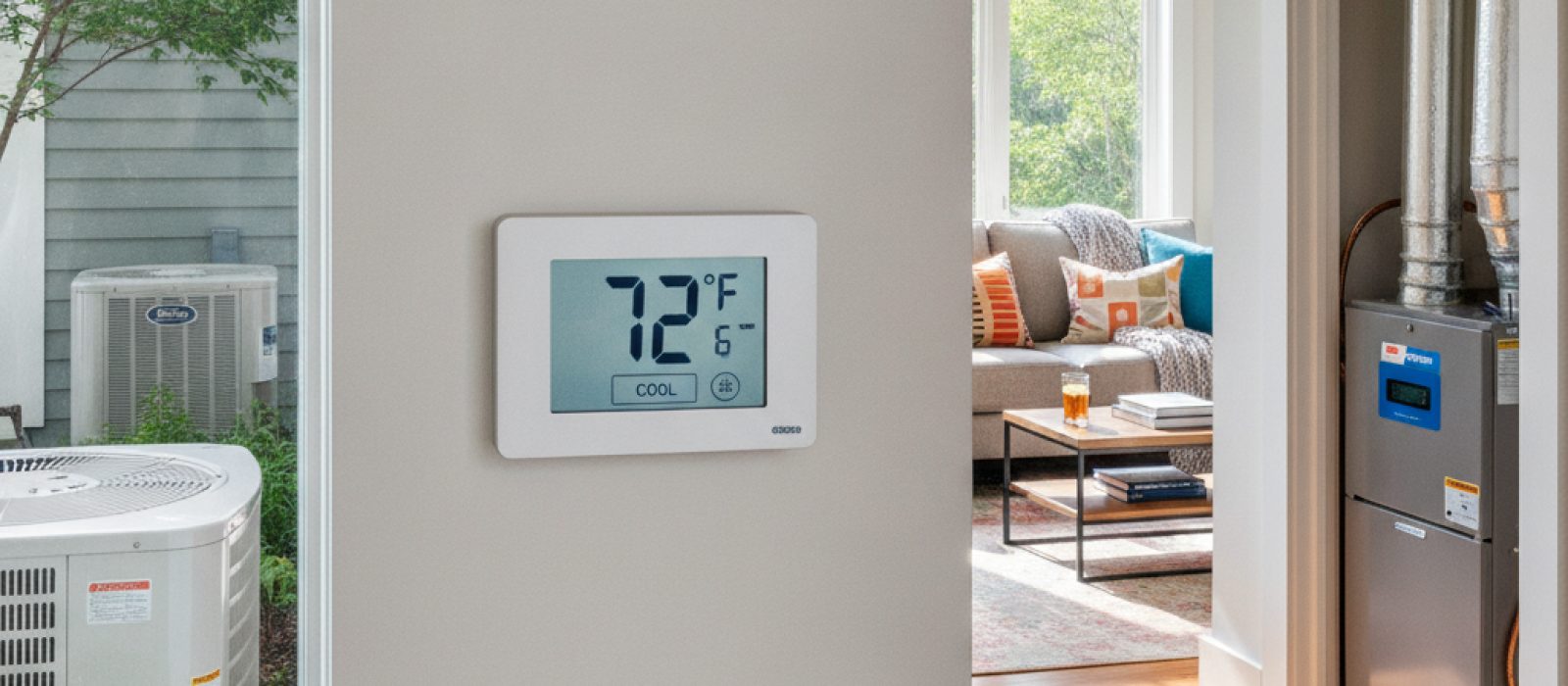
York, Ruud, Bryant and American Standard HVAC: Brand Overview
A guide to understanding the cooling technology and reliability of four major HVAC manufacturers for U.S. homeowners.
4 min read

You’re enjoying a cool breeze, and then suddenly your air conditioner shuts off. A few minutes later, it kicks back on, only to shut down again shortly after. This frustrating pattern, known as “short cycling,” is more than just an annoyance; it’s a red flag that something isn’t quite right with your HVAC system. Not only does it make your home less comfortable, but it also wastes energy, increases wear and tear on your unit, and could lead to costly repairs if left unaddressed.
So, why does your AC keep cycling on and off? Let’s dive into the most common reasons behind this frequent start-stop behavior and what you can do about it.
Perhaps the most significant and often overlooked cause of short cycling is an air conditioner that’s too large for your home’s square footage. An oversized unit cools your home too quickly, reaching the thermostat’s set temperature before it has a chance to complete a full cooling cycle. While this might sound efficient, it’s not. It means the unit starts and stops frequently, never running long enough to properly dehumidify your home or distribute air evenly. The result is often a home that feels clammy and has inconsistent temperatures, despite the AC constantly running.
A simple, yet incredibly common culprit is a dirty or clogged air filter. Your air filter is designed to trap dust, pet dander, and other particles, preventing them from entering your AC system. When it gets too dirty, it restricts airflow, forcing your unit to work harder. This reduced airflow can cause the evaporator coil to freeze up or trigger safety mechanisms that shut the unit down prematurely. A clean filter is essential for efficient operation.
Refrigerant is the lifeblood of your air conditioning system, absorbing heat from your home and releasing it outside. If your system is low on refrigerant, usually due to a leak, it struggles to cool your home effectively. The unit may run for a short period, unable to reach the desired temperature, and then shut off, only to try again later. Low refrigerant not only causes short cycling but also reduces cooling capacity and can lead to compressor damage.
As your AC cools your home, it also removes humidity, producing condensation. This water collects in a drain pan and exits through a condensate drain line. If this line becomes clogged with mold, algae, or debris, the water can back up, triggering a float switch safety mechanism that shuts down the system to prevent water damage. Once the water level drops, the unit may attempt to restart, leading to short cycling.
Your thermostat is the brain of your HVAC system. If it’s malfunctioning, miscalibrated, or placed in a poor location (e.g., in direct sunlight or near a heat source), it can send incorrect signals to your AC unit. A faulty thermostat might prematurely sense that the desired temperature has been reached, or it might not accurately read the ambient temperature, causing the AC to cycle on and off erratically.
Various electrical issues can cause short cycling. These include faulty wiring, a malfunctioning capacitor (which helps start the motor), or issues with the contactor. These components are vital for the smooth operation of your AC, and any disruption can lead to intermittent shutdowns.
A frozen evaporator coil is often a symptom of other problems, such as restricted airflow (due to a dirty filter) or low refrigerant. When the coil freezes, it can’t absorb heat effectively. The system may try to run, sense the issue, and shut down to prevent damage, only to try again once the ice melts slightly.
While some issues like a dirty filter are easy DIY fixes, many causes of short cycling require the expertise of a qualified HVAC technician. If you’ve checked the basics and your AC is still short cycling, it’s time to call in the professionals. They can accurately diagnose the problem, whether it’s an oversized unit, a refrigerant leak, a clogged drain line, or an electrical issue, and perform the necessary repairs safely and effectively.
Ignoring short cycling can lead to higher energy bills, reduced system lifespan, and eventually, a complete breakdown. Addressing the issue promptly will restore comfort to your home, protect your investment, and ensure your AC runs efficiently for years to come.
A guide to understanding the cooling technology and reliability of four major HVAC manufacturers for U.S. homeowners.
A comprehensive look at Mitsubishi mini-split technology and Hyper-Heat performance for year-round climate control in U.S. homes.
A comprehensive guide to understanding Daikin HVAC systems, including model tiers, standard maintenance requirements, and factory warranty coverage.
A comprehensive guide to understanding Carrier air conditioning systems, efficiency ratings, installation factors, and maintenance requirements.
An objective look at Goodman HVAC systems, covering performance, longevity, and what homeowners should know before choosing a budget-friendly cooling solution.
A guide to understanding Trane residential cooling systems, including component integration and maintenance requirements for homeowners.
Be the first to comment.